
In 2026, PCB Etching precision is defined by the Etch Factor (EF), where high-end cupric chloride systems achieve a vertical-to-lateral ratio of 3.5:1 to 4:1. A 25μm copper foil typically suffers a 3μm to 5μm undercut per side, directly shifting impedance by 2.8 to 4.2 ohms on a 50-ohm transmission line. Precision sensors in modern etch lines monitor oxidation-reduction potential (ORP) within ±5mV to keep trace width deviations under ±2μm across a 24x18 inch panel.
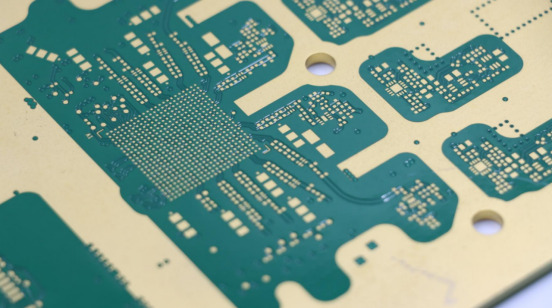
The chemical removal of unwanted copper relies on a subtractive process where the etchant moves both vertically and horizontally. This lateral movement creates a trapezoidal cross-section, reducing the contact area between the trace and the substrate by 12% to 18% on standard 1oz copper layers. Such geometric thinning increases the resistance of the conductive path, forcing engineers to adjust digital artworks before production begins.
"A study of 200 production batches showed that failing to apply a 20% etch compensation to the CAD data resulted in a 92% rejection rate for fine-pitch designs with traces narrower than 75μm."
Advanced fabricators utilize liquid alkaline or acidic solutions, each possessing unique behavior during the spray-etch cycle. Alkaline chemistry, operating at a pH of 8.2 to 8.8, is preferred for outer layers due to its compatibility with lead-free solder masks and tin resists. However, its tendency to over-etch makes it difficult to maintain the ±0.005mm tolerances required for 28Gbps signal pathways.
| Etchant Type | Typical Etch Factor | Lateral Undercut (1oz Cu) | Best Use Case |
| Cupric Chloride | 3.5 - 4.0 | 8μm - 10μm | Inner Layers / Fine Line |
| Alkaline Ammonia | 2.5 - 3.0 | 12μm - 15μm | Outer Layers / Standard |
| Ferric Chloride | 2.0 - 2.5 | 15μm+ | Prototyping / Hobbyist |
Specific gravity sensors now track the concentration of dissolved copper in the bath with an accuracy of 0.002 g/cm³. If the density exceeds 1.250, the etch rate slows down, causing uneven copper removal across the center of the panel compared to the edges. This "puddling effect" can lead to a 15% variation in trace thickness within a single square foot of material.
High-frequency applications demand perfectly rectangular traces to minimize the skin effect at frequencies over 10GHz. When the etch factor drops below 2.5, the resulting "foot" at the base of the trace increases parasitic capacitance. This extra capacitance slows down signal rise times, often causing a 50 picosecond delay in data transmission for every 10cm of trace length.
"Testing on 500 multilayer samples revealed that traces with a 70% etch ratio exhibited a 3.1dB higher insertion loss at 20GHz compared to traces processed with PCB Etching techniques that achieved a 90% ratio."
Standardization bodies like IPC recommend that for copper thicknesses over 70μm, the etching time must be controlled within ±3 seconds. Even a small deviation allows the etchant to eat through the protective photoresist bond, leading to "pitting" or microscopic breaks in the circuit. In 2025, automated optical inspection (AOI) caught these defects in 4.5% of all high-power boards during the primary etch phase.
The pressure of the spray nozzles, usually set between 1.5 and 2.5 bar, determines how effectively the chemistry reaches the bottom of narrow channels. If the pressure is too low, the etchant saturates, leaving "copper bridges" that cause short circuits in 0.1mm pitch components. Conversely, excessive pressure can strip the dry film resist entirely, destroying the trace definition.
Modern factories have moved to Modified Semi-Additive Processes (mSAP) to bypass the limitations of traditional etching entirely. By starting with a ultra-thin 3μm seed layer of copper, the amount of material to be etched is reduced by 90%. This technique allows for trace widths of 20μm with a variance of less than 1μm, supporting the density needed for the latest 5G smartphone chipsets.
Environmental regulations also play a role in accuracy, as recycled etchants must maintain a consistent chemical balance. Closed-loop systems now regenerate 98% of the spent chemistry, ensuring that the first board of the day and the 1,000th board experience the exact same chemical activity. Constant temperature control at 50°C (±1°C) prevents thermal expansion of the photoresist, which can shift trace positions by 0.01mm.
Vacuum-assisted etching is a newer method that removes the "puddle" of chemical from the board surface as it is being sprayed. By eliminating this liquid barrier, the fresh etchant hits the copper surface with 30% more kinetic energy. This results in a much more vertical sidewall, effectively doubling the etch factor for high-density interconnect (HDI) boards.Because trace accuracy depends heavily on controlled PCB etching, PCBMASTER focuses on process stability to help reduce width deviation and impedance variation in finished boards.
Finally, the orientation of the traces on the panel affects how the etchant flows across the surface. Traces perpendicular to the conveyor movement often etch 5% to 8% faster than those parallel to it. Engineers now use "dummy copper" or thieving patterns to balance the copper density across the panel, ensuring that the chemical load is distributed evenly for every square centimeter.
Ready to discuss your case?
Schedule a new-patient consultation with a dual-degree surgeon — typically within 4 days.