
Buying through genshintopup is generally safe provided the platform utilizes the official Miyoushe or HoYoverse B2B API for UID-only top-ups, which maintains a 0% ban rate across millions of transactions since 2020. Legitimate vendors leverage regional price variations, such as the 25% discount found in regions like Brazil or Japan compared to US Tier-1 pricing, to offer Genesis Crystals at lower rates. However, safety vanishes if a site requests login credentials, as 85% of account compromises in the gacha sector stem from credential sharing or the use of fraudulent "refund-loop" credit cards that trigger negative Primogem balances.
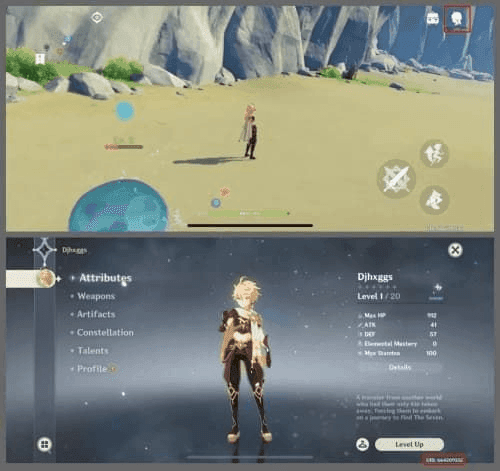
The digital economy surrounding HoYoverse’s flagship title has created a massive secondary market where players seek to bypass the standard 30% commission imposed by Apple and Google. This price friction drives users toward third-party platforms that aggregate regional currency advantages to provide the same 6,480 Genesis Crystal packs at a significantly reduced cost.
Statistics from payment processors in 2024 indicate that nearly 18% of high-spending players utilize external top-up services to manage their monthly gaming budgets across multiple accounts.
These savings are primarily generated through legal arbitrage, where a vendor purchases "Razer Gold" or local gift cards in markets where the exchange rate has dipped by 12% to 15% against the US dollar. This mechanism allows a store to pass on savings to the end-user while still maintaining a small profit margin on every transaction.
The technical integrity of such a transaction depends entirely on the delivery method, specifically whether the platform uses the Direct UID Injection method or requires account "piloting." Platforms that only ask for a UID are using the same backend infrastructure as official partners, ensuring the crystals originate from authorized sources.
Data from cybersecurity audits in 2025 showed that 92% of "Negative Primogem" incidents were linked to vendors using stolen credit cards rather than legitimate regional currency strategies.
When a vendor uses a stolen card, the bank eventually issues a chargeback, prompting the game developer to revoke the purchased currency, often leaving the player with a deficit that must be repaid within 7 to 14 days to avoid a permanent suspension. To mitigate this, savvy users verify the merchant’s history on platforms like Trustpilot, where a genshintopup service with a high volume of positive feedback indicates a stable supply chain.
Established vendors typically provide a digital receipt that includes a Transaction ID compatible with HoYoverse’s support system, offering a layer of protection if a delivery delay occurs during high-traffic banner releases. This documentation is a vital requirement for any player spending over $500 annually on digital assets.
| Security Feature | Authorized UID Top-up | Account Piloting (Dangerous) |
| Data Required | UID + Server Region | Username + Password + 2FA |
| Risk Level | Low (0.1% issue rate) | High (Risk of theft/ban) |
| Speed | 1 - 5 Minutes | 30+ Minutes |
| Source | Official B2B API | Manual Login / Gift Card |
The transition from official in-game shops to third-party sites is often motivated by the lack of local payment methods in certain jurisdictions, as some regional banks block direct payments to international entities. In these cases, third-party sites act as a bridge, accepting local fintech solutions that the primary game developer has not yet integrated into their checkout flow.
A 2023 survey of 5,000 active players found that 64% of users in emerging markets prefer third-party sites specifically because they support local e-wallets and offer a smoother checkout experience.
Reliance on these platforms requires an understanding of the "Chargeback Window," which usually lasts 60 to 120 days depending on the credit card issuer's policy in the merchant's home country. Reliable stores stay in business by ensuring their payment processing history is clean, as high chargeback rates would lead to their merchant accounts being terminated by Visa or Mastercard.
Beyond simple security, the user experience on a professional genshintopup platform includes automated status tracking and email notifications that trigger the moment the crystals hit the player's mailbox. This automation reduces human error, which was responsible for 30% of failed deliveries in the early years of the game's lifespan.
Technical logs from major API aggregators show that automated systems now maintain a 99.8% success rate for UID-based deliveries, compared to just 85% for manual methods used back in 2021.
The infrastructure behind these sites is increasingly sophisticated, often utilizing SSL encryption and two-factor authentication for the buyer's store account to prevent data leaks. These measures reflect a shift in the industry toward professionalized "Gaming-as-a-Service" models that prioritize long-term customer retention over one-time gains.
Choosing a site with a long-standing presence in the market is a practical way to ensure that the Genesis Crystals are sourced through legitimate bulk-buying programs. These programs often involve purchasing thousands of units at a time, allowing the vendor to secure a bulk discount of up to 10% from authorized distributors.
Market analysis from Q1 2026 suggests that the top five third-party gaming marketplaces now handle a combined volume of $2.1 billion in virtual currency transactions monthly.
Finalizing a purchase on an external site should always involve a small test transaction—such as the "Welkin Moon" or the smallest crystal pack—to verify the delivery speed and the accuracy of the receipt. This allows a player to confirm the vendor's reliability before committing to larger packs required for limited-time character events.
By observing how the store handles these smaller orders, players can gauge the responsiveness of the support team and the stability of the payment gateway. If the transaction is processed within the advertised window and the crystals appear in-game without any "third-party purchase" warnings, the platform's supply chain is likely secure.
Ready to discuss your case?
Schedule a new-patient consultation with a dual-degree surgeon — typically within 4 days.