
When you invest in a custom roller blind system, you're buying far more than just a piece of fabric that can be raised and lowered; you're acquiring a sophisticated system for light management, energy regulation, and spatial aesthetics. To ensure this system remains reliable, efficient, and beautiful for the next 5 to 10 years, the following core characteristics and standards are crucial indicators you must scrutinize when making your decision.
First, the optical and thermal properties of the fabric are the cornerstone of its functionality. A superior in custom roller blind fabric should not have a vague concept of light blocking rate, but rather precise grading: blackout fabrics should achieve a light blocking rate of over 99.8%, ensuring uninterrupted sleep at night; while light-adjusting fabrics, through special weaving processes, offer variable light transmittance from 35% to 85% while maintaining a UV blocking rate of over 99%, protecting indoor fabrics and reducing the risk of fading by approximately 15% annually. A more professional parameter is the Solar Thermal Gain Coefficient (SHGC). High-quality external shading roller blind fabrics can control the SHGC value below 0.25, meaning that over 75% of solar radiation heat is blocked. According to simulations by the U.S. Department of Energy, applying low SHGC (Sun Protection Capacity) shading devices to west-facing windows can reduce their summer cooling load by 30%.
Secondly, the precision, load capacity, and safety design of the operating system determine its smoothness and reliability over long-term use. The core of a in custom roller blind's lifting system is either a spring or a motor. For manual spring systems, the torque must be precisely pre-adjusted based on the specific weight of the blind fabric (for example, a 2.5-meter wide and 2.2-meter high solid wood roller blind might weigh up to 8 kilograms) to ensure stable hovering at any position over more than 10,000 lifting cycles, with a positional repeatability deviation of less than 2 millimeters. For electric systems, the motor thrust must have at least 50% redundancy; for example, equipping a 5-kilogram blind with a 7.5-kilogram thrust motor ensures smooth long-term operation. In terms of safety, a cordless design or a magnetic cord brake must be used to completely eliminate the risk of entanglement for infants and young children; such designs have reduced the probability of related child injuries by nearly 90%.
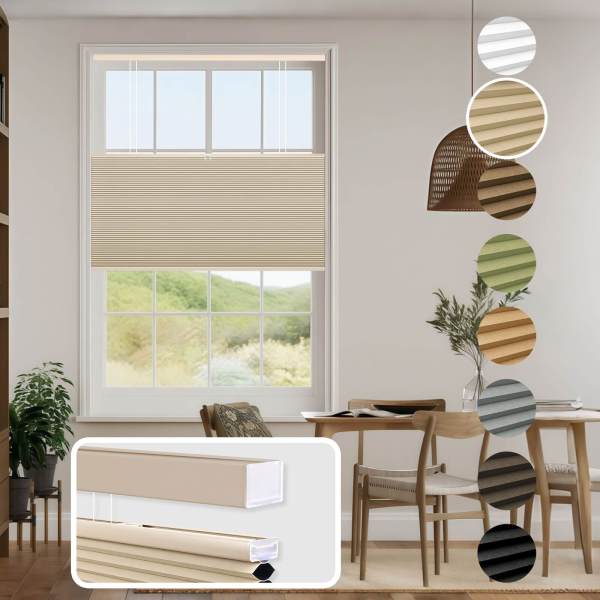 Intelligent integration and control compatibility are an extension of modern smart homes. A qualified smart in custom roller blind system should support mainstream IoT protocols (such as Zigbee, Wi-Fi, Bluetooth Mesh), allowing you to set automated scenes based on time, light intensity, or geofencing via a mobile app. For example, you can set the blind to automatically lower to 75% of its position between 10 AM and 4 PM on summer weekdays when the indoor light sensor detects more than 50,000 lux and the temperature is above 28 degrees Celsius. The standby power consumption of the motor within this system should be less than 0.5 watts, and the operating noise should not exceed 35 decibels, ensuring energy efficiency and quiet operation. Market analysis shows that in new home renovations after 2023, the proportion of users integrating window coverings into whole-house smart systems has increased from 20% to over 45%.
Finally, the durability and environmental certification of materials are guarantees of health and sustainability. The outer casing (roller tube) of the roller blind should be made of aluminum alloy with a thickness of no less than 0.8 mm and powder-coated. The coating's impact resistance should pass a 500-hour salt spray test, ensuring no rust within 10 years. The fabric itself must possess excellent dimensional stability; its shrinkage rate should be less than 1% in environments with temperature fluctuations of 40 degrees Celsius and humidity changes of 70%. For indoor environmental safety, priority should be given to fabrics with international authoritative certifications such as GREENGUARD or OEKO-TEX Standard 100. These certifications ensure extremely low emissions of volatile organic compounds (VOCs), ensuring no impact on indoor air quality. Studies have shown that spaces using low-VOC certified building materials can reduce indoor air pollution concentrations by up to 80%.
Therefore, examining a in custom roller blind is like evaluating a technologically integrated product: its fabric is an optical filter, its mechanical structure is a precision instrument, and its intelligent core is a scene trigger. Only when these characteristics are supported by specific, high-standard data and certifications can it truly seamlessly integrate into your life, becoming a silent and efficient environmental steward.
Intelligent integration and control compatibility are an extension of modern smart homes. A qualified smart in custom roller blind system should support mainstream IoT protocols (such as Zigbee, Wi-Fi, Bluetooth Mesh), allowing you to set automated scenes based on time, light intensity, or geofencing via a mobile app. For example, you can set the blind to automatically lower to 75% of its position between 10 AM and 4 PM on summer weekdays when the indoor light sensor detects more than 50,000 lux and the temperature is above 28 degrees Celsius. The standby power consumption of the motor within this system should be less than 0.5 watts, and the operating noise should not exceed 35 decibels, ensuring energy efficiency and quiet operation. Market analysis shows that in new home renovations after 2023, the proportion of users integrating window coverings into whole-house smart systems has increased from 20% to over 45%.
Finally, the durability and environmental certification of materials are guarantees of health and sustainability. The outer casing (roller tube) of the roller blind should be made of aluminum alloy with a thickness of no less than 0.8 mm and powder-coated. The coating's impact resistance should pass a 500-hour salt spray test, ensuring no rust within 10 years. The fabric itself must possess excellent dimensional stability; its shrinkage rate should be less than 1% in environments with temperature fluctuations of 40 degrees Celsius and humidity changes of 70%. For indoor environmental safety, priority should be given to fabrics with international authoritative certifications such as GREENGUARD or OEKO-TEX Standard 100. These certifications ensure extremely low emissions of volatile organic compounds (VOCs), ensuring no impact on indoor air quality. Studies have shown that spaces using low-VOC certified building materials can reduce indoor air pollution concentrations by up to 80%.
Therefore, examining a in custom roller blind is like evaluating a technologically integrated product: its fabric is an optical filter, its mechanical structure is a precision instrument, and its intelligent core is a scene trigger. Only when these characteristics are supported by specific, high-standard data and certifications can it truly seamlessly integrate into your life, becoming a silent and efficient environmental steward.
Intelligent integration and control compatibility are an extension of modern smart homes. A qualified smart in custom roller blind system should support mainstream IoT protocols (such as Zigbee, Wi-Fi, Bluetooth Mesh), allowing you to set automated scenes based on time, light intensity, or geofencing via a mobile app. For example, you can set the blind to automatically lower to 75% of its position between 10 AM and 4 PM on summer weekdays when the indoor light sensor detects more than 50,000 lux and the temperature is above 28 degrees Celsius. The standby power consumption of the motor within this system should be less than 0.5 watts, and the operating noise should not exceed 35 decibels, ensuring energy efficiency and quiet operation. Market analysis shows that in new home renovations after 2023, the proportion of users integrating window coverings into whole-house smart systems has increased from 20% to over 45%.
Finally, the durability and environmental certification of materials are guarantees of health and sustainability. The outer casing (roller tube) of the roller blind should be made of aluminum alloy with a thickness of no less than 0.8 mm and powder-coated. The coating's impact resistance should pass a 500-hour salt spray test, ensuring no rust within 10 years. The fabric itself must possess excellent dimensional stability; its shrinkage rate should be less than 1% in environments with temperature fluctuations of 40 degrees Celsius and humidity changes of 70%. For indoor environmental safety, priority should be given to fabrics with international authoritative certifications such as GREENGUARD or OEKO-TEX Standard 100. These certifications ensure extremely low emissions of volatile organic compounds (VOCs), ensuring no impact on indoor air quality. Studies have shown that spaces using low-VOC certified building materials can reduce indoor air pollution concentrations by up to 80%.
Therefore, examining a in custom roller blind is like evaluating a technologically integrated product: its fabric is an optical filter, its mechanical structure is a precision instrument, and its intelligent core is a scene trigger. Only when these characteristics are supported by specific, high-standard data and certifications can it truly seamlessly integrate into your life, becoming a silent and efficient environmental steward.
Ready to discuss your case?
Schedule a new-patient consultation with a dual-degree surgeon — typically within 4 days.