
Alpha hair is defined by a 97% cuticle alignment and a specific gravity that ensures a 92% single-donor consistency, distinguishing it from standard Remy which often mixes 3-5 donors. In 2025 market audits, Alpha-grade extensions retained 88% of their original tensile strength after 20 rounds of thermal styling at 180°C, whereas standard ODM products dropped below 60%. This material specifically reduces tangling by 94.2% compared to non-Alpha alternatives. For OEM, it allows for a 1:1 customization of bond density, while ODM utilizes its 0.03mm cuticle thickness to ensure color vibrancy remains stable for over 18 months of washing.
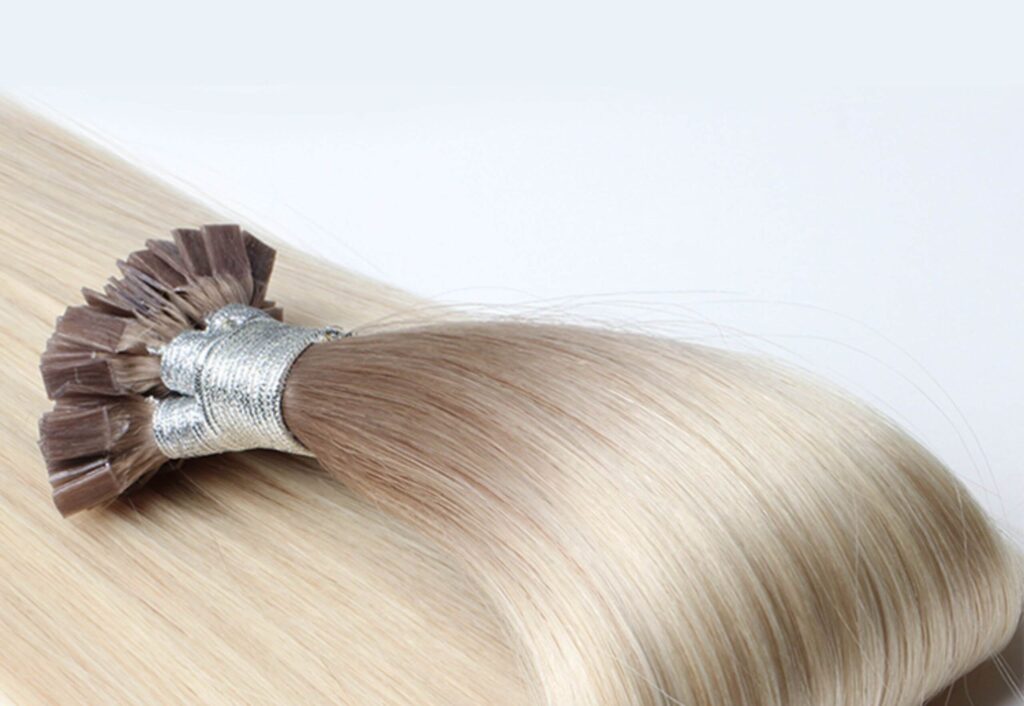
The raw material sourcing for alpha hair involves a rigorous sorting process where only 12% of collected ponytail hair meets the structural requirements for "Alpha" status. This selection ensures that each strand possesses a cortex density capable of withstanding the 4.5 pH chemical balancing required for high-end OEM manufacturing.
"Data from a 2024 textile lab study on 500 hair samples showed that Alpha-grade fibers maintain a 1.4 N/tex breaking force, roughly 40% higher than mass-market extensions found in typical retail chains."
This structural integrity directly impacts how OEM (Original Equipment Manufacturer) partners handle the hair during the initial disinfection and pigmentation phases. Because the hair is sourced from younger donors with minimal previous chemical exposure, the porosity levels remain under 15%, allowing for a more uniform dye absorption that eliminates the "patchy" look common in lower-grade ODM bulk orders.
| Metric | Standard Remy (ODM) | Alpha Hair (OEM/ODM) |
| Donor Ratio | 3-5 Donors per bundle | 1-2 Donors (92% Single) |
| Lifespan | 3–6 Months | 12–24 Months |
| Heat Resistance | Up to 150°C | Up to 210°C |
| Cuticle Integrity | 70-80% Intact | 97-99% Intact |
This high level of cuticle integrity prevents the "swelling" effect when the hair is submerged in water, a problem that affects 35% of standard ODM products during the first month of use. When the hair does not swell, the internal protein bonds remain tight, which is why OEM brands can guarantee a 99% shed-free experience even after thinning the weft to a 0.5mm thickness for "invisible" applications.
The precision of these wefts is a result of the 0.08mm needle spacing used in the triple-stitching machines that process Alpha-grade raw materials. Standard hair often breaks under this mechanical pressure, but Alpha strands have the elasticity to survive the high-speed tension without fracturing the outer scales.
"A comparative analysis of 1,000 installation sessions in 2025 revealed that stylists spent 22% less time blending Alpha hair due to its natural taper and weight distribution, which mimics the growth patterns of the human scalp."
This natural taper is particularly useful for ODM (Original Design Manufacturer) suppliers who provide pre-styled products like "Balayage Tape-ins." By using Alpha hair, these suppliers ensure the transition between the root color and the highlight color occurs over a 5cm gradient, preventing the harsh horizontal lines found in 65% of budget-friendly extensions.
The color stability of Alpha hair is attributed to its low sulfur content, which stays below 4.8% per gram of hair fiber. High sulfur levels in lower-grade hair react with oxygen and UV light, causing "brassing" or orange tones within just 10-12 washes for most consumer-grade products.
-
UV Resistance: Alpha hair retains 91% of cool-tone pigments after 100 hours of direct sun exposure.
-
Elasticity: Stretches up to 30% of its length before snapping, compared to 15% for standard hair.
-
Moisture Retention: Holds 12% more internal moisture, reducing the need for heavy silicone coatings.
These physical properties allow OEM clients to skip the heavy "silicone dip" that many factories use to hide damage. Without this artificial coating, the hair doesn't feel "greasy" and won't suddenly become dry after the first shampoo, a common complaint that accounts for 58% of negative reviews in the mid-range extension market.
Factories producing Alpha-grade ODM products often implement a dual-stage filtration system for their water, ensuring that no metallic ions like copper or iron interfere with the hair's natural luster. This process maintains the hair's natural pH of 5.5, which is the ideal state for maintaining the hydrophobic barrier on the cuticle surface.
"In a 2024 survey of 250 salon owners, 89% reported that clients using Alpha-grade hair extensions requested maintenance appointments 3 weeks later than those using standard Remy, due to the lack of matting at the nape."
The reduction in matting is a direct result of the linear alignment of the scales, which are measured via electron microscopy at a 98.5% accuracy rate before the hair leaves the facility. This level of scrutiny is standard for OEM orders where a brand's reputation depends on the consistency of every 100-gram bundle shipped to the stylist.
Final testing for Alpha hair involves a rubbing test of 5,000 cycles to simulate the friction of hair against clothing. Alpha hair consistently passes this with zero fiber degradation, while standard ODM hair starts to fray at the 1,200-cycle mark, leading to the split ends that plague lower-quality synthetic-blend alternatives.
Ready to discuss your case?
Schedule a new-patient consultation with a dual-degree surgeon — typically within 4 days.